
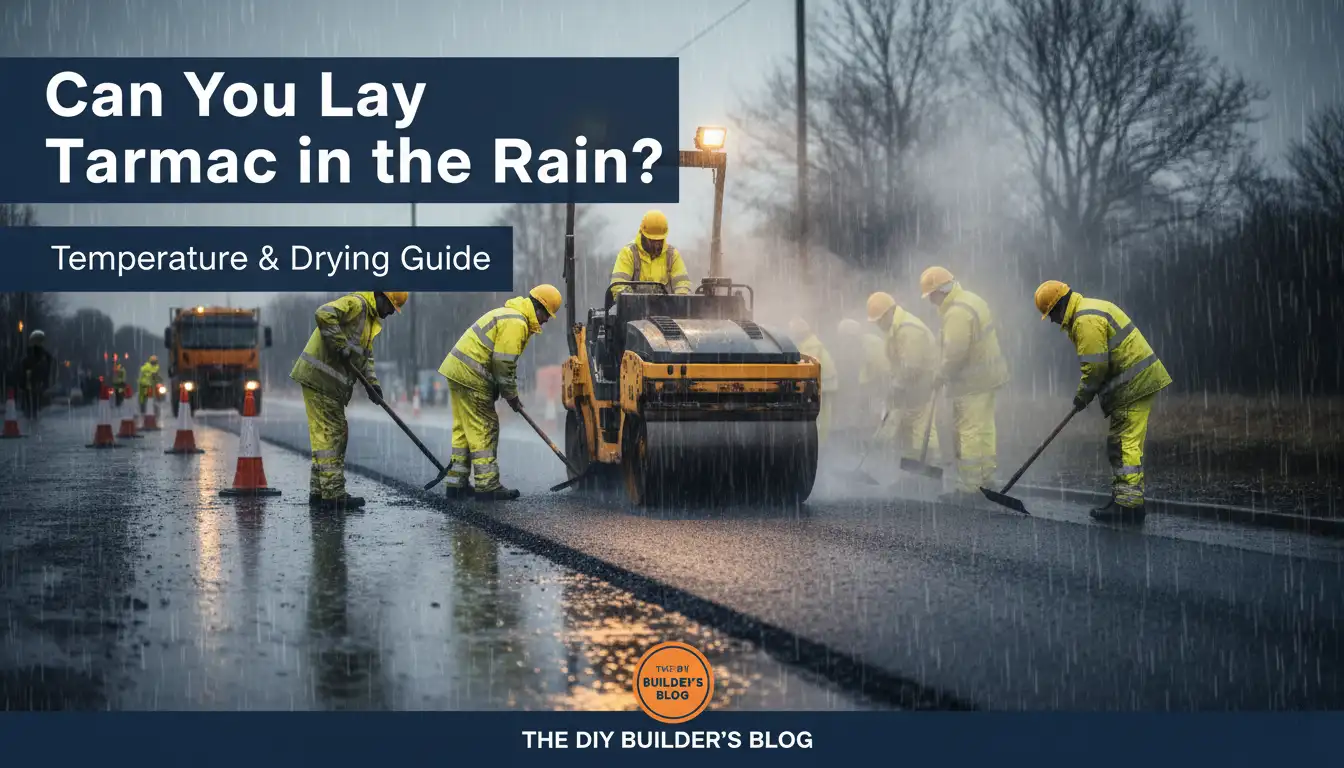
You are planning a new driveway. You have the dates set. But the weather forecast shows rain. Now you have a big question. Can you lay tarmac in the rain?
The short answer is no. You should not lay hot tarmac in the rain.
Water is the enemy of hot tarmac. Tarmac is made of stone and a sticky black binder called bitumen. This binder is like glue.
If water gets into the mix, the glue stops working. The tarmac will not stick to the ground. It will not stick to itself.
Also, hot Asphalt Concrete (Tarmac) needs to be hot to work. Rain cools it down too fast. If it gets cold before you pack it down, it will not harden properly. It will be weak and crumbly.
Ideally, you need dry weather. The temperature should be above 10°C (50°F).
There is one small exception. You can use “cold lay” tarmac for small pot holes in damp weather. But for a full driveway, you must wait for a dry day.
If you lay it in the rain, you will likely see cracks and holes within a year. This guide explains why rain ruins tarmac and when it is safe to start your project.
Does It Need to Be Dry to Lay Tarmac?
Yes, the ground must be dry.
To understand why, think about oil and water. They do not mix. Tarmac contains bitumen, which is an oil-based product.
If you pour hot tarmac onto wet ground, the water turns into steam. This steam gets trapped inside the tarmac.
This creates little bubbles or voids. These bubbles make the surface weak. The tarmac cannot bond to the sub-base below it.
Later on, when heavy cars drive on it, the surface will move. It might crack or peel away.
You also need to think about the compaction. This is when you use a heavy roller to press the tarmac flat.
If the mix is wet, the roller cannot pack the stones together tightly. The surface will end up porous. This means water will soak into it easily, causing more damage later.
What Happens If It Rains on Newly Laid Tarmac?
Imagine you just finished laying the driveway. The roller is done. Then, it starts to rain.
Is this a problem?
It depends on how much time has passed.
If it rains while the tarmac is still hot and soft, the water will cool the surface too quickly. This is called thermal shock.
The top layer cools down faster than the bottom layer. This can cause the surface to crack immediately.
Rain can also wash away the bitumen oils from the surface. You might see a rainbow sheen on the water. This means the glue is washing away. The surface will look rough and grainy instead of smooth.
However, if the tarmac has been down for a few hours and has cooled effectively, light rain is usually okay.
The danger zone is the first 12 to 24 hours. Heavy rain during this time can leave marks and weaken the finish.
What Is the Minimum Temperature for Laying Tarmac in the UK?
Temperature is just as important as rain. Tarmac relies on heat to be workable.
In the UK, or anywhere with cold weather, you must follow strict rules.
The minimum air temperature for laying hot tarmac is usually 10°C.
Ideally, you want it to be 15°C or warmer.
If it is colder than 10°C, the tarmac gets stiff very fast. It becomes hard to shovel and rake.
More importantly, the roller cannot compact it properly. If you cannot compact it, the driveway will be full of air gaps. Frost will get into those gaps in winter and break the driveway apart.
Also, pay attention to the ground temperature. Even if the air is warm, the ground might still be frozen. Never lay tarmac on frozen ground.
Can You Lay Tarmac in Frost or Winter?
Winter is the worst time to install a new driveway.
You cannot lay hot tarmac in frost.
If the ground is frozen, it acts like a giant ice block. When you put hot tarmac on top, the ice melts quickly. This creates a layer of water right under your new driveway.
The tarmac will slide around. It will not bond to the base.
Check out: Can a Diamond Blade Cut Metal? Steel, Rebar & Aluminum Explained
Once the ground freezes again, it will heave and lift. Your expensive new driveway will be ruined.
Most professional contractors stop laying tarmac during the coldest winter months. They wait for spring when the risk of frost is gone.
Is Cold Lay Tarmac Suitable in Wet Weather?
There is a product called cold lay tarmac. This is different from the hot stuff used for whole driveways.
It comes in bags. It is soft and ready to use without heating.
Can you use cold lay tarmac in the rain?
Yes, you can use it in damp conditions. It is designed for emergency repairs. You often use it to fill a small pothole.
However, it is not perfect. Even cold lay works best when the hole is dry. If the hole is full of water, the material will not stick to the sides.
You should sweep out any standing water before you put the cold lay in.
Remember, cold lay is for patches. Do not try to pave a whole driveway with it. It is not strong enough for that.
How Long Does Tarmac Take to Dry and Harden?
Tarmac does not “dry” like paint. It hardens by cooling down.
The process has three stages:
- Cooling (0 to 12 hours): The tarmac cools from a high temperature. It becomes solid. You must keep off it completely.
- Hardening (24 to 48 hours): The surface is hard enough to walk on. You should still avoid driving on it.
- Curing (Months): The bitumen fully hardens over time. This can take up to a year.
When can you use it?
- Walking: You can usually walk on it after 24 hours.
- Driving: Ideally, wait 3 to 5 days before driving a car on it.
If the weather is very hot, it takes longer to cool. If the weather is cool, it hardens faster.
Be careful with power steering. If you turn your steering wheel while the car is stopped, you can tear the surface. This is a risk for the first few months.
When Should You Not Lay Tarmac?
You should cancel or delay the work if:
- It is raining heavily: Any standing water will ruin the mix.
- It is freezing: Frost or ice makes the ground unstable.
- The sub base is wet: If the stone layer underneath is soaked, it needs to drain first.
- High winds: Strong wind can cool the mix too fast, just like rain.
Can Water Seep Through Tarmac?
Standard tarmac is not waterproof, but it is water resistant.
However, it is slightly porous. Over time, water can seep into tiny cracks.
If the driveway is laid correctly, it should have a slope. This allows water to run off into a drain.
If water sits on the surface in puddles, it will eventually soak through. This can damage the foundation.
There is a special type called permeable tarmac. This is made with larger gaps to let water flow right through it. This helps prevent flooding.
What Time of Year Is Best to Tarmac a Driveway?
The best time is usually late spring to early autumn.
From May to September, the days are longer. The temperatures are usually above 10°C. There is less risk of frost.
October can be risky. If it is a warm October, you are fine. If an early frost hits, you might have problems.
Avoid scheduling large jobs in December, January, or February.
How Long After Laying Can You Drive on Tarmac?
This is the most common question.
You should keep cars off for at least 3 days. 5 days is even better.
If you drive on it too soon, the tires will leave depressions. The tarmac is still soft deep down, even if the top feels hard.
Heavy delivery trucks should stay off for at least 2 weeks.
Can You Lay Block Paving in the Rain?
Block paving is different from tarmac. It uses individual bricks and sand.
Yes, you can lay block paving in light rain.
The rain does not damage the bricks. However, if it rains too hard, the sand can wash away.
The ground also needs to be stable. If the ground turns to mud, the blocks will sink.
So, block paving is more flexible than tarmac, but a dry day is still best.
Summary: Can You Lay Tarmac in the Rain?
- No, do not lay hot tarmac in the rain. It will not bond and will crack.
- Temperature Matters: It must be above 10°C (50°F).
- Wait for Dry Ground: Never lay on wet or frozen soil.
- Cold Lay Exception: You can use bagged cold lay for small repairs in damp weather.
- Be Patient: Wait 3 to 5 days before driving on your new driveway.
